
Skip to content
Two adults seated apart on a garden bench, viewed from behind

You do not need the same explanation

Two partners can seek help while understanding the relationship’s difficulty in different ways.

Request an Appointment


A woman in a sage cardigan writing in a notebook on a shaded garden patio

Begin with the two accounts

One person may describe too much conflict, while the other describes too little connection. One may want a practical change, while the other wants a painful experience acknowledged. Often, these accounts overlap without being identical.

A consultation does not require you to settle the disagreement beforehand. You can describe what each of you is looking for and ask whether the practice may be a fit.

An open wooden gate leading toward a garden and golden hills

Name what each person hopes will change

A broad statement, like wanting the relationship to be better, can mean different things. It can help to ask what an ordinary interaction would look like if something felt different: how you discuss plans, respond to disappointment, or return to a conversation after conflict.

Specific examples give us a clearer starting point than deciding which partner has the correct summary of the whole relationship.

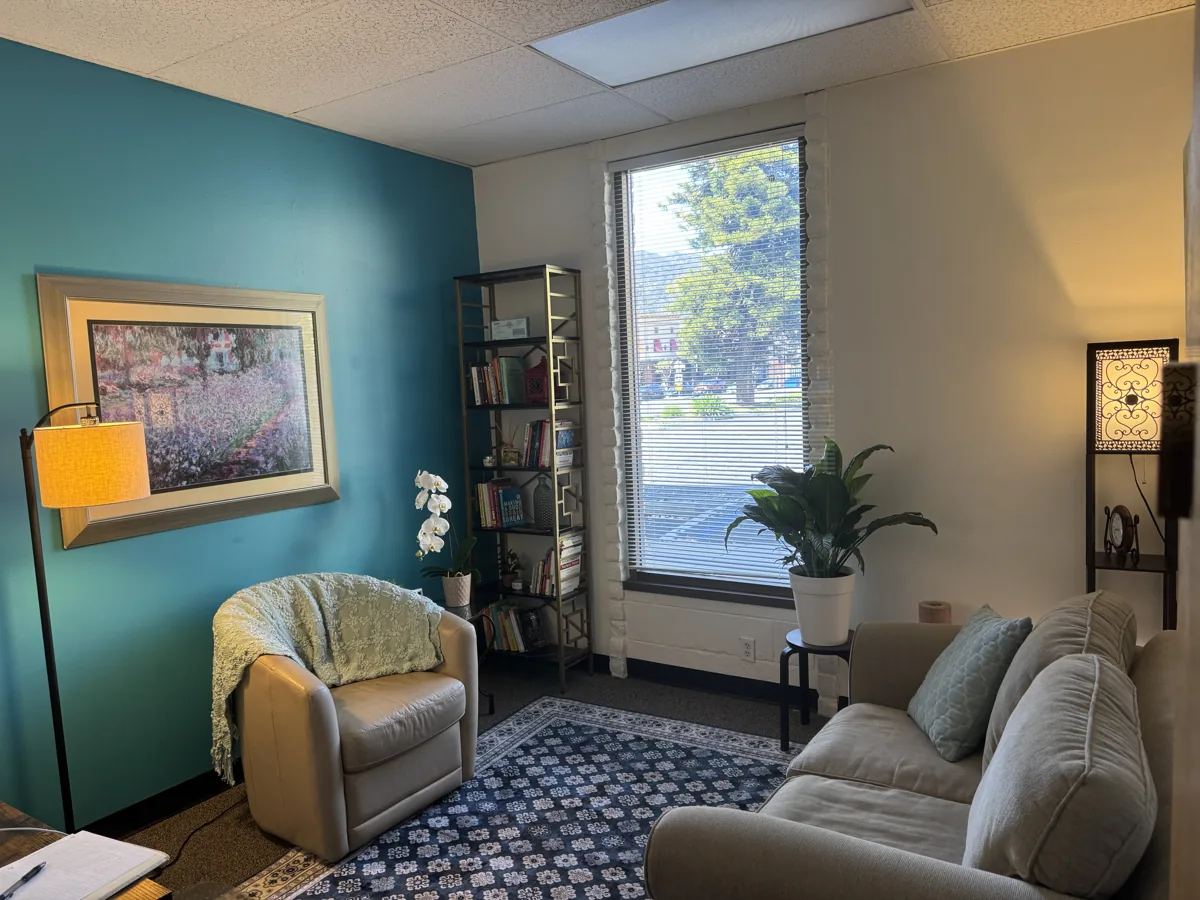
Kristin Cantella’s office with two armchairs, a window and a teal accent wall

Look at the pattern between you

My couples work primarily uses Emotionally Focused Couples Therapy. I help partners identify the negative interaction pattern as the problem, rather than making each other the whole problem.

This does not mean actions and their consequences disappear into a shared label. Together, we can pay attention to what each person does, how it affects the other, and how the exchange unfolds.


A woman in a cream sweater sitting in a wooden armchair, holding a mug and looking toward a sunny window

Discuss hesitation openly

One partner may feel more hopeful about therapy than the other. You may also have different concerns about being blamed, being misunderstood, or repeating an unhelpful experience, and those concerns are useful to bring into our conversation about fit.

You do not need to perform agreement for the therapist. Rather, it is more helpful to describe what each of you is willing to discuss and what questions remain about beginning the work.

Two garden paths joining beneath olive trees

Clarify the appointment process

The practice is based in Montrose. You can request a free 15-minute consultation to ask about couples work, current rates, and the right session arrangements, including the setting that is available and appropriate for your couples appointments.

If we move forward, paperwork is arranged before the first appointment. The request-first process leaves room to clarify fit and practical questions, instead of asking you to choose an open slot before those conversations have happened.

Golden light filtering through a bamboo garden

Questions People Ask

Does one of us have to persuade the other first?

It is useful to discuss each person’s interest and hesitation honestly. A consultation can include questions about whether and how to begin.

Will different accounts prevent useful work?

Different perspectives can be part of what we explore. Agreement about every event is not required before asking about fit.

Bring Both Perspectives

Request a free 15-minute consultation to discuss whether this work fits what you need.

Request an Appointment Or call 626-824-8572