
Why Relationship Anxiety After Trauma Develops
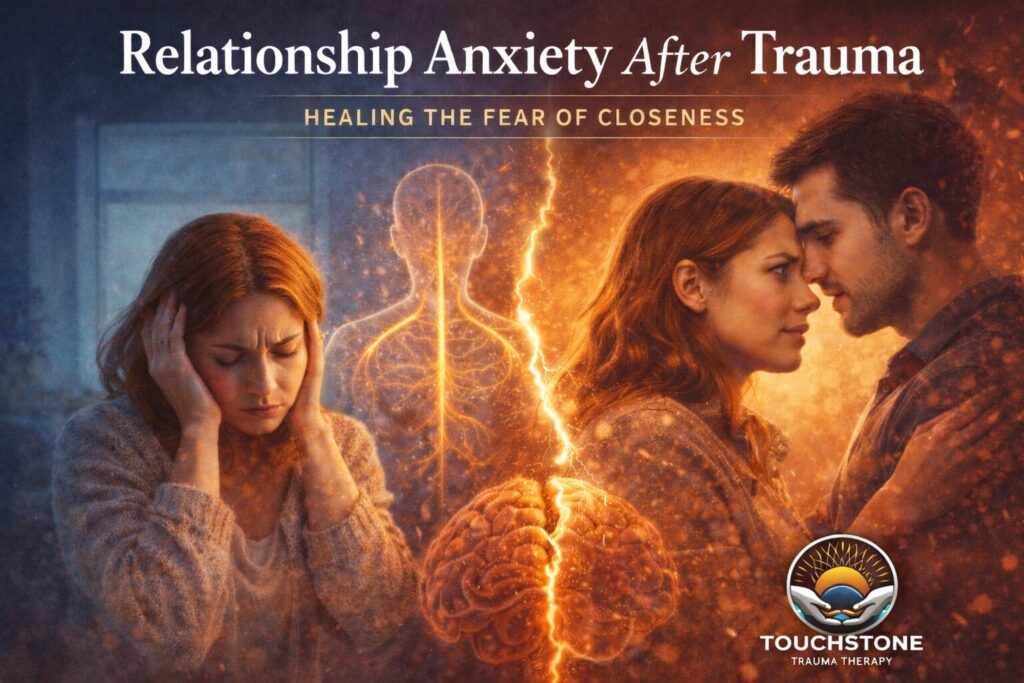
Relationship anxiety can feel overwhelming — and, at times, deeply confusing. On one hand, you long for closeness. On the other, the moment connection begins to deepen, your body tightens, your thoughts race, and fear takes over. As a result, relationships can feel both necessary and terrifying at the same time.
Whether we meet in person in Montrose or connect by telehealth from Glendale, Burbank, Pasadena, or Los Angeles, I often hear clients describe relationship anxiety like this:
- “I’m scared they’re going to leave.”
- “I overthink everything they say or do.”
- “I want to trust, but I panic.”
- “I get anxious when someone gets too close.”
- “I’m always waiting for things to fall apart.”
Although it may feel personal or shameful, relationship anxiety is not neediness or insecurity. Instead, it is a trauma response rooted in the nervous system.
Why Relationship Anxiety Develops
Very often, relationship anxiety forms when emotional safety was inconsistent earlier in life. For example, if you grew up in an environment where love felt unpredictable — or if past relationships were painful — your nervous system learned that closeness could lead to hurt.
Common experiences include:
- Emotional neglect
- Inconsistent caregiving
- Being ignored or dismissed
- A parent whose love felt conditional
- Betrayal or abandonment
- Toxic or unstable relationships
- Losing trust in someone who was supposed to protect you
Over time, these experiences teach the brain to associate connection with danger. Consequently, even healthy relationships can trigger fear.
How Relationship Anxiety Shows Up
Relationship anxiety doesn’t always look like panic. In fact, it often shows up quietly and internally. You might notice:
- Overanalyzing texts, tone, or timing
- Replaying conversations repeatedly
- Constant fear of upsetting someone
- Difficulty trusting reassurance
- Needing frequent validation
- Pulling away when things feel too close
- Feeling insecure even when nothing is “wrong”
- Feeling “too much” or “not enough”
- Spiraling after minor disagreements
Importantly, these reactions are not character flaws. Rather, they are your nervous system responding to old emotional wounds.
The Nervous System and Attachment
This is why relationship anxiety after trauma often feels automatic, even when the current relationship is safe.
Relationship anxiety is closely tied to attachment. When emotional needs were not met consistently, your nervous system learned certain beliefs, such as:
- “Love is unpredictable.”
- “People leave.”
- “My needs are too much.”
- “I have to earn connection.”
Therefore, when someone gets close now, your body reacts as if the past is happening again. Even though the present relationship may be safe, your nervous system hasn’t updated yet.
This is why reassurance often doesn’t “stick.” The fear lives in the body, not just the mind.
Understanding how attachment and the nervous system work together can be a powerful part of healing.
Why Logic Alone Doesn’t Fix Relationship Anxiety
Many people try to talk themselves out of relationship anxiety by reminding themselves that their partner is kind, consistent, or committed. However, logic alone rarely calms a trauma-wired nervous system.
That’s because relationship anxiety is not a thinking problem — it’s a regulation problem.
Until the nervous system feels safe, fear will continue to surface, regardless of how much reassurance you receive.
How Healing Happens in Therapy
Therapy helps you understand and support the younger parts of you that still fear abandonment, rejection, or emotional loss. At Touchstone Trauma Therapy, I work with relationship anxiety using trauma-informed approaches that focus on safety, connection, and nervous system healing.
This includes:
Attachment-Focused Therapy
First, therapy itself becomes a safe, consistent relationship where trust can slowly develop.
Parts Work (Internal Family Systems)
At the same time, Parts Work helps identify the inner child parts that panic when closeness feels risky — and teaches them that they are no longer alone.
Somatic Therapy
Meanwhile, somatic work helps your body learn calm and grounding when connection feels overwhelming.
EMDR
Additionally, EMDR helps reprocess memories that taught your nervous system to expect hurt or abandonment.
Boundary Work
Finally, therapy supports you in learning how to express needs, limits, and feelings without fear of losing the relationship.
Together, these approaches help your nervous system relearn that closeness can be safe.
Signs You’re Healing Relationship Anxiety
Healing doesn’t mean fear never shows up again. Instead, it means fear no longer controls your behavior.
Over time, clients often notice:
- Trusting others a little more
- Less overthinking and reassurance-seeking
- Feeling more grounded during conflict
- Expressing needs without panic
- Not spiraling when someone is quiet or busy
- Staying present instead of pulling away
- Feeling more confident in relationships
Gradually, connection begins to feel less threatening — and more nourishing
If relationship anxiety after trauma overlaps with fear of conflict or difficulty setting boundaries, you may also find it helpful to read more about fear of conflict after trauma and setting boundaries without guilt.
Love Should Feel Safe — Not Scary
If relationships have felt confusing, intense, or painful, that makes sense. Those patterns were learned somewhere. However, they are not permanent.
With support, compassion, and nervous system healing, relationships can become places of safety instead of fear.
You deserve connection that feels steady, respectful, and secure. And you don’t have to heal relationship anxiety alone.
With support, relationship anxiety after trauma can soften, allowing connection to feel safer over time.
Touchstone Trauma Therapy
2441 Honolulu Ave, Suite 120
Montrose, CA 91020
(626) 824-8572
Serving Montrose • Glendale • Burbank • Pasadena • Los Angeles • Telehealth/Remote Video Therapy Across California